
Many questions still arise about end-of-life batteries
Mobility batteries have become essential in our society, whether it's to power our electric scooters, bicycles, or cars. However, depending on their usage intensity, batteries can sometimes malfunction or stop working altogether. In such situations, it is essential to adopt a responsible approach, both environmentally and economically. In this article, we will explore the necessary steps and possible solutions when dealing with one or multiple out-of-service batteries.
1. Diagnosis
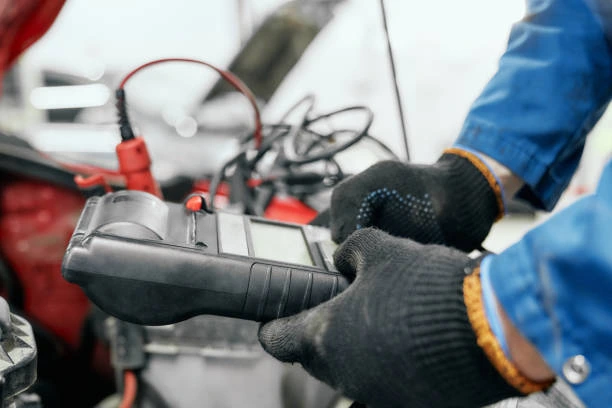
Before making a decision about the fate of your battery, it is important to try to diagnose the problem. First and foremost, you need to ensure that the battery is indeed the source of the malfunction: charging issues could be related to a damaged charging port or simply a faulty charging cable. Additionally, some batteries stop charging below 1°C in winter, and simply warming them up can get them functioning again. If you have ruled out all these possibilities and the battery remains unusable, it will need to be handled by professionals. You can proceed to the next step: sorting.
2. Sorting
If you have multiple defective batteries, it is important to sort them properly. Some batteries may still be partially functional or repairable, while others may be completely dead. Therefore, you need to identify batteries that can potentially be repaired or reused and separate them from those that are irreparable. This will facilitate the subsequent processing. It is crucial to differentiate batteries with major damages from those with broken connectors or charging problems, as the malfunctions are often similar, and associated repairs will be easier. This sorting process is also essential from a battery safety perspective.
To facilitate the sorting and ensure making the right decisions afterward, the platform developed by Bib Batteries allows operators to categorize batteries based on their diagnosis, collected data, and the associated cost of each operation. Bib then takes care of the entire logistics.

3. Safety
Ensuring safety during the transportation and storage of batteries is crucial, especially with damaged batteries, to prevent fire hazards. Sorting is an important step to gather batteries with similar risks (from close to zero to severe). Different transport regulations apply legally depending on whether the batteries are for repair (low risk) or recycling (high risk). These batteries must be handled with care and protected from physical damage. Manufacturer recommendations regarding charging and storage should be followed.
In case of overheating, severe damage, leakage, or deformation, it is urgent to immediately stop using the batteries and place them in a safe location (a sand container is generally recommended).
What are the solutions to manage end-of-life batteries?
1. Repairing
Repair is often the most cost-effective and environmentally friendly solution for a faulty battery. In many cases, the problem can be resolved by simply replacing a defective component or an internal connector. Battery repair services specialize in identifying the problem, fixing it, and providing a compliance warranty for the repair.
Repairing extends the battery's lifespan while avoiding waste and unnecessary waste production. It also eliminates the need to purchase a new battery and represents, on average, a three times lower expense.
In general, battery repairers are capable of performing accurate diagnostics to assess the battery's health and real damages. This diagnosis should be the basis for making the right decision.
At Bib Batteries, we strongly recommend repair for its cost-effectiveness and environmental character. When chosen, we take care of having the batteries repaired by the best professionals at the best price. We have already done this with hundreds of bicycle batteries.
2. Second-life applications
When repair is not cost-effective or the battery's capacity has significantly deteriorated, giving it a second life by reusing its components as they are in another application (e.g., stationary storage) is a viable option.
Defective batteries can be disassembled, and the still functional cells can be retrieved for use in less demanding applications. For example, these cells can power low-energy electronic devices or store energy from renewable sources. Reusing cells maximizes resource utilization and reduces the demand for new batteries. This process also avoids the energy-intensive recycling and material losses associated with battery recycling, as many components can be reused.
In our process, if repair is not feasible, we encourage cell reuse and second-life applications. This practice doubles the battery's lifespan and halves the associated carbon footprint associated with its initial use. We take ownership and responsibility for the battery and transfer it to our partners involved in the second life process. We have already done this with scooter batteries.
3. Recycling
As a last resort, if the battery is genuinely irreparable or its components are too damaged for a second life, recycling is the option.
Batteries contain valuable materials such as lithium, cobalt, nickel, manganese, and aluminum, which can be recovered and reused in the production of new batteries or other products. It is important to note that batteries must be correctly recycled in specialized facilities as they may contain environmentally hazardous substances if mishandled.
To handle recycling, there are organizations called eco-organisms that operate in this recycling sector. They collect financial eco-contributions from producers and/or buyers of a product, upon request, in exchange for a promise to handle the end-of-life product for free and take it for recycling. However, due to legal frameworks and mandatory quotas, eco-organisms are currently more focused on recycling rather than second-life applications.
Although battery recycling is developing in Europe with the establishment of recycling plants, the capacities remain limited compared to the demand. Therefore, recycling is not currently a sustainable and guaranteed solution, which emphasizes the need to prioritize second-life options for batteries. It is essential to evaluate the previous two options before considering recycling, which is also the least favorable solution for environmental preservation.
However, if recycling is the only viable solution for unusable battery stocks, Bib batteries ensures it to its customers through negotiated volumes with our recycling partners.
Conclusion
When a mobility battery no longer functions properly, it is crucial to adopt a responsible approach to minimize environmental impact and reduce associated costs. After accurately diagnosing the problem and sorting the batteries, repair, cell reuse, and recycling are possible solutions to consider. By prioritizing repair and reuse, we can extend the battery's lifespan, reduce electronic waste, and avoid producing and purchasing new batteries. At each step, it is important to research available options and seek professional assistance when necessary to ensure proper management of defective batteries.
At Bib batteries, we are committed to offering and implementing the best solutions for out-of-service or end-of-life batteries through our intelligent decision tree and partner network.
Explore our resources


Stay informed about Bib's latest updates
Get technical content, use cases, and industry updates — tailored to your needs.
Want to know more?
Get in touch for more detailed information.