
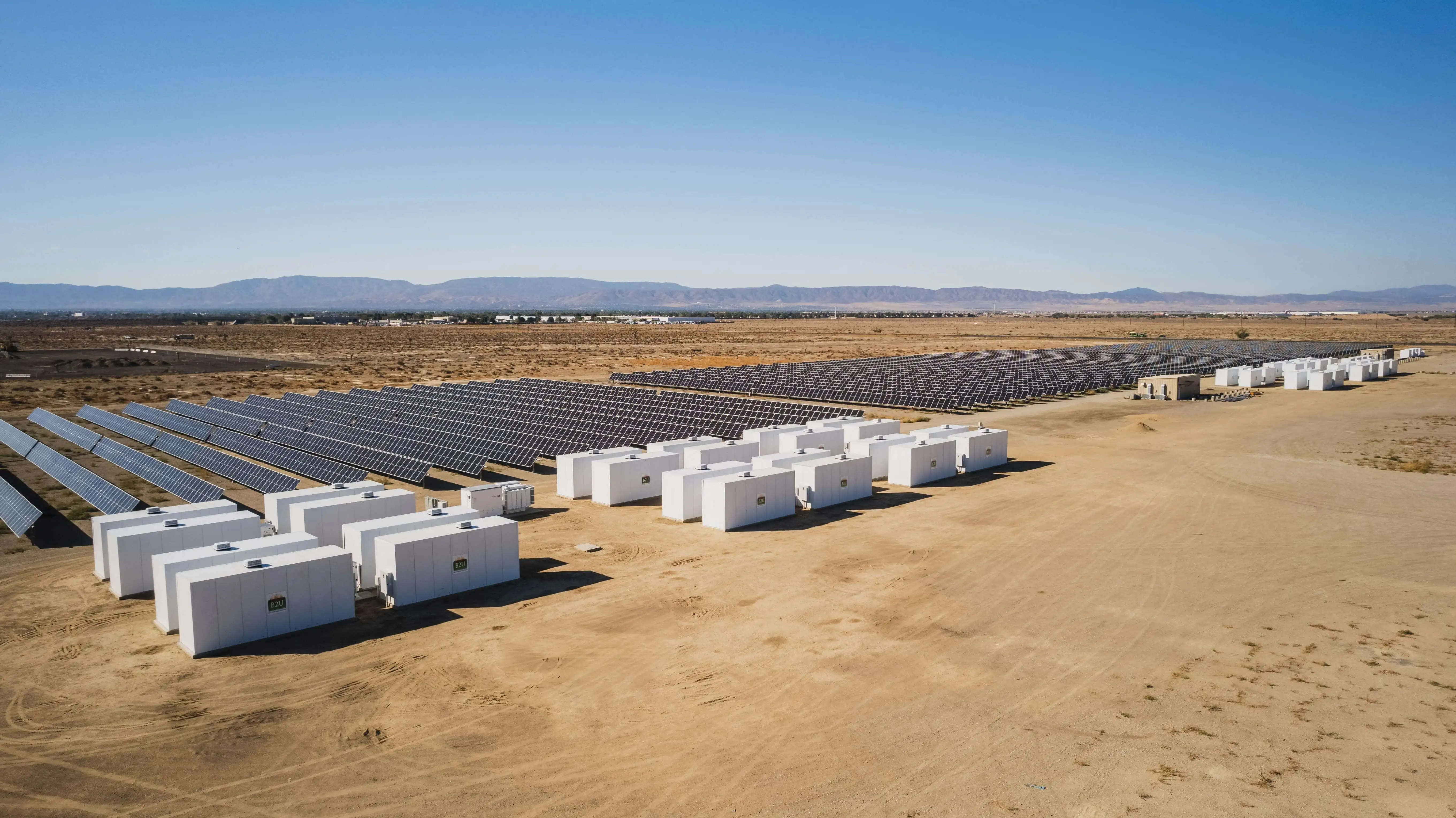
We know that batteries are expensive, and their production polluting. Therefore, we need to extend their lifespan in order to minimise this impact. Also, more and more LFP batteries are being used. Recycling them is less profitable, and reuse in a second life is the preferred solution.
Take the example of an electric vehicle battery. Its use requires high power for acceleration, high capacity for autonomy and low weight and volume. Once naturally degraded after several years of use, this battery can be used in other applications: for example, to store energy from solar panels.
So, whether directly or indirectly, it is possible to find new uses for batteries. We'll look at some examples of battery reuse, and the challenges that need to be overcome to give them a second life.
.webp)
Use cases for second-life batteries
Domestic use
Second life batteries can find real use in the household: they can be used to store renewable energy produced at home (by solar panels, for example), or as an emergency generator.
For these domestic uses, batteries undergo very few charge/discharge cycles, so their lifespan can be extended by several years.
The Tesla Powerwall is the best-known example of a domestic battery. For the moment, it is produced from new batteries, but because of its usage characteristics (infrequent and shallow cycles), second life batteries would be ideal.
Trade and industry
Businesses that consume a lot of electricity are used to storing it when prices and demand are low, so that they can use it when demand (and prices) rise: this is known as load shifting. This is how factories, supermarkets and other groups operate, consuming their energy at peak times and grid energy at off-peak times.
In this case, electricity requirements are even greater than for domestic use. The telecoms sector is one of the biggest markets for batteries, and there are already companies reusing electric car batteries in their products.
EV charging
Batteries can be used to charge electric vehicles when power is unavailable, and also as a power bank, to reduce the power demands on the grid. Charging an electric vehicle requires very high power, and as such dedicated and costly power infrastructure. By buffering the power in a battery, the power demand on the grid is reduced, and less expensive infrastructure may be used.
Other itinerant uses
Even if a degraded battery can no longer be used in a vehicle such as a car, they are perfectly fit for golf carts, forklift trucks, pallet trucks and many others that do not have high requirements in terms of lightness, autonomy or speed.
Portable electricity can also do away with the need for noisy, polluting generators, by using batteries in their place: on building sites, for events, camping, or in emergencies.
Grid stabilisation and smoothing
With renewable energies playing an increasing role in the energy mix, the electricity grid can become unstable. Over the course of a day, with the wind, sunrise and sunset, but also on a minute-by-minute scale, energy production sees peaks and troughs. These variations, which would be disastrous for the grid, are compensated for by stationary batteries, installed either on the producer or consumer side.
.webp)
Large battery banks can help stabilise grid frequency. A discrepancy between demand and production leads to a variation in the frequency of the AC voltage. Normally compensated for by gas turbine power plants, batteries can relieve this dependence on fossil fuels.
.webp)
All these uses contribute to reducing the cost of new batteries, both by reducing their demand in cases where second life batteries can replace them, and by increasing their lifespan. All these advances in the electrification of vehicles and the democratisation of renewable energies are helping to reduce greenhouse gas emissions.
"There is no doubt that most researchers, based on the available literature, agreed on utilizing retired batteries for a second life application as a way to a greener and more sustainable society". Hussein Saleh Mohammed Haram et al, Feasibility of utilizing second life EV batteries: Applications, lifespan, economics, environmental impact, assessment, and challenges, Alexandria Engineering Journal
What are the challenges for second-life batteries?
Cost
For second life batteries to be competitive, their cost must be munch lower than that of new batteries. A study shows that second life batteries need to cost less than 60% of new batteries in order to become widely available.
Ironically, the use of more second life batteries reduces demand, and therefore the cost, of new batteries, which increases market penetration and the supply of second life batteries. It is now up to institutions and political decision-makers to encourage the use of second life batteries. And just in time, a European regulation on the subject is in preparation.
Supply
Second life batteries are necessarily derived from the use of new batteries. Their supply is always uncertain, which makes it difficult to create industries around them. If one day demand for new batteries falls (for example, hydrogen-powered cars replace battery-powered EVs), the cheap supply of batteries would weaken the industries. Ironically, the development of re-use may require the production of excessive quantities of new batteries and therefore battery waste.
[In addition, some applications, particularly industrial load smoothing and grid storage, require large quantities of batteries that exceed the current supply and are therefore irrelevant.
Integration
Electric vehicles batteries come in many different forms, making it difficult to use them all together for the same application. Heterogeneity between batteries - cell sizes, voltages, pack shapes, BMS (battery management system) - complicates the scaling up of this segment.
Reuse also requires at least partial dismantling of the batteries. This work is difficult to automate (because of its variety), and the manpower required drives up costs, but some companies are working on it.
.webp)
An uncertain state-of-health
Reusing a battery involves certain risks: we cannot know how long a battery has been in use, whether or not it is internally damaged, and to what extent use has increased its potential for danger. The lack of transparency and knowledge about batteries is holding back their adoption for second life.
"Monitoring the ageing history of first life batteries helps to decide which batteries may be eligible for a second life, and in which application they can provide sustainable and cost-effective performance." Martinez-Laserna et al. Evaluation of Lithium-ion Battery Second Life Performance and Degradation. In: Proceedings of IEEE Energy Conversion Congress and Expo'.
As things stand, second life batteries are not used often enough. Their high cost compared with the use of fossil fuels makes them unattractive at the moment. But, as current events show, we are now at a tipping point in the way we produce, store and use electrical energy.
References
[1] A Comprehensive Review on Second-Life Batteries: Current State, Manufacturing Considerations, Applications, Impacts, Barriers & Potential Solutions, Business Strategies, and Policies (ieee.org)
[2] CANALS CASALS, Lluc; AMANTE GARCÍA, Beatriz; CREMADES, Lázaro V.. Electric vehicle battery reuse: Preparing for a second life. Journal of Industrial Engineering and Management, [S.l.], v. 10, n. 2, p. 266-285, may 2017. ISSN 2013-0953.
Feasibility assessment of remanufacturing, repurposing, and recycling of end of vehicle application lithium-ion batteries | Foster | Journal of Industrial Engineering and Management
[4] Feasibility of utilising second life EV batteries: Applications, lifespan, economics, environmental impact, assessment, and challenges - ScienceDirect
[5] Martinez-Laserna et al. Evaluation of Lithium-ion Battery Second Life Performance and Degradation. In: Proceedings of IEEE Energy Conversion Congress and Expo
[6] https://revov.co.za/applications/base-station-batteries
[8] https://powerstar.com/technology/battery-buffered-ev-charging
Explore our resources

Stay informed about Bib's latest updates
Get technical content, use cases, and industry updates — tailored to your needs.
Want to know more?
Get in touch for more detailed information.