

Batteries don’t last forever: below a certain state of health, batteries become overly expensive, difficult and dangerous to use in their primary application.
So what happens to them after that?
When a battery reaches the end of its useful life (between 70 and 80% SOH in mobility application), there are 3 paths it may take: disposal, recycling and reuse.
Battery landfilling
As with most solid waste, disposed cells may be landfilled, that is buried with the rest of waste in designated areas. There are however some problems with this.
An immediate danger is the risk of landfill fires: flammable lithium cells are causing more and more fires in landfills, with resultant polluted air, damaged materials and loss of life.
Another problem over the longer term is pollution leaching: heavy metals leaking into groundwater, acids forming into rain, and organic solvent toxicity are but some of the potential hazards of burying used battery cells.
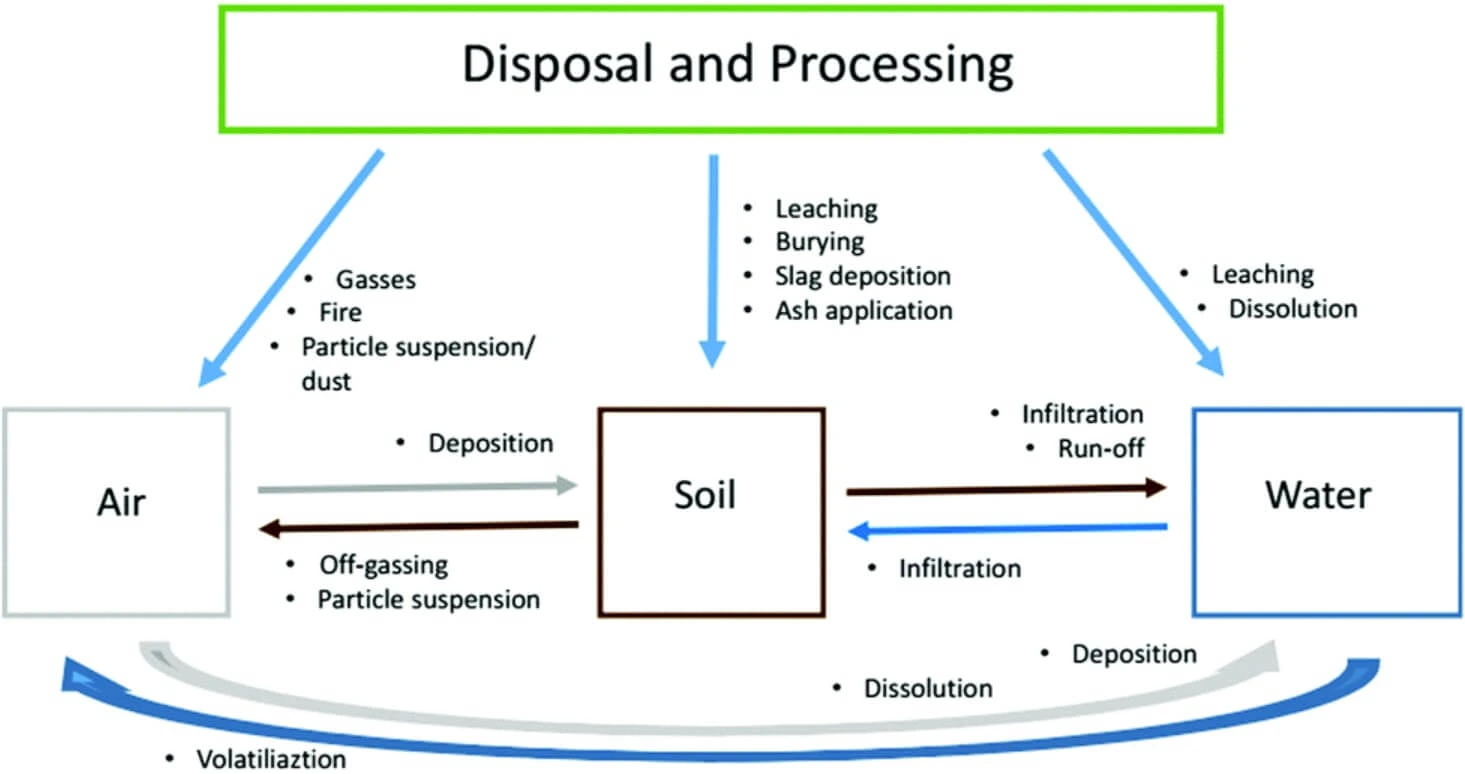
On the face of it, simply disposing of batteries like any other piece of waste is a bad idea: we need to make some other use of them.
Battery recycling
Batteries have a lot of varied materials, and some of them are expensive, useful, and/or dangerous enough to warrant recovering rather than destroying. This is particularly the case for cathodes, often containing cobalt, aluminium, copper, or other metals. They form a large fraction of the cells’ mass and value.
As mentioned previously, many different materials and chemicals are required to recycle a battery, mostly water, solvents and reagents. But on the other hand, recycling allows us to recover material than can be used to make new batteries, or other industrial products (downcycling). Although some materials can be recycled to serve once again, preventing the depletion of virgin resources, recycling has its own environmental impact.
With common involvement of mechanical crushing, pyrolysis (high temperature chemistry), solvent extraction and drying, cell recycling has a fairly high energy cost and subsequent GHG emissions, not to mention potential for chemical pollution. And a study has shown that in many cases, recycling batteries may not reduce GH emissions, and may even increase them. This is especially notable for Lithium-Iron-Phosphate cathode batteries, which have few valuable elements to recover.

The three R’s are Reduce, Reuse, Recycle, in that order. Assuming we already have a battery, we should try to reuse it before recycling. Less waste, less cost, and a faster turnaround of the battery components are all desirable.
"Although these (recycling) processes still aim to fulfil the ideals of CE (circular economy), additional processing is inevitably associated with the consumption of additional resources and generation of waste. Velázquez-Martínez et al."
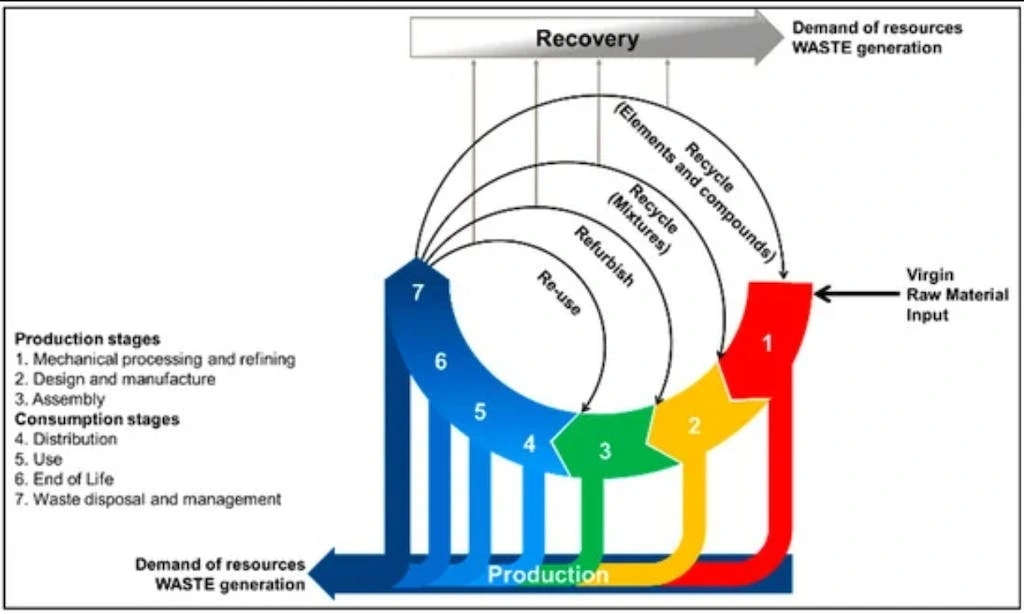
The more direct the reuse, the better. For example, one could envisage only reusing certain parts of the battery (the BMS if the cells have died, or vice-versa. One could even select cells that are in good shape, discarding the rest)
Even when they are considered 'end-of-life', batteries may contain up to 80% of their original capacity. Although no longer suitable for their prime use, we can find applications that are more tolerant of degraded use. We’ll look at these possibilities in the next article.
One of the problems when deciding what to do with an end-of-life battery is not knowing how it has lived, and what state it is in: uncertainty around the state of health leads to more landfilling and destructive recycling than is necessary, and more risk when reusing batteries.
References
[1] Wojciech Mrozik , Mohammad Ali Rajaeifar, Oliver Heidrich and Paul Christensen, (2021) Environmental impacts, pollution sources and pathways of spent lithium-ion batteries, DOI: 10.1039/D1EE00691F Energy Environ. Sci.
[2] Velázquez-Martínez, Omar, Johanna Valio, Annukka Santasalo-Aarnio, Markus Reuter, and Rodrigo Serna-Guerrero. 2019. "A Critical Review of Lithium-Ion Battery Recycling Processes from a Circular Economy Perspective" 5, no. 4: 68.
[3] Ciez, R.E., Whitacre, J.F. Examining different recycling processes for lithium-ion batteries. Nat Sustain 2, 148–156 (2019).
Explore our resources

Stay informed about Bib's latest updates
Get technical content, use cases, and industry updates — tailored to your needs.
Want to know more?
Get in touch for more detailed information.